


Financial Agents Need a HarnessAugust 3, 2026
READ MORE.svg)


Whop, the fastest-growing internet market recently valued at $1.6 billion, has added Veda’s vault infrastructure to let millions start earning yield on their account balances in just a few clicks.
Whop’s 21M+ customers can now activate their account balances by opting into earning within Whop Finance. More than 2.5M businesses using Whop can also enable this yield feature with Treasury.
“With Whop Finance we’re building the financial infrastructure for the next generation of internet businesses. Funds held in Whop Treasury don’t sit idle. Instead they generate yield securely,” said Whop Head of Crypto Michael Beer. “Veda lets us offer a wealth-generation engine built directly into the Whop dashboard.”
This new integration activates account balances on the backend by routing funds through a Veda vault that allocates to onchain borrow-lend markets. Dollar balances are converted to Tether’s stablecoin and deployed to the leading lending protocol Aave to generate yield and collect rewards. On the frontend, all users have to do is opt in and watch their balances grow.
“Veda’s mission is to make it easy for enterprises to offer seamless onchain earn products,” said Sunand Raghupathi, CEO and Co-Founder of Veda.
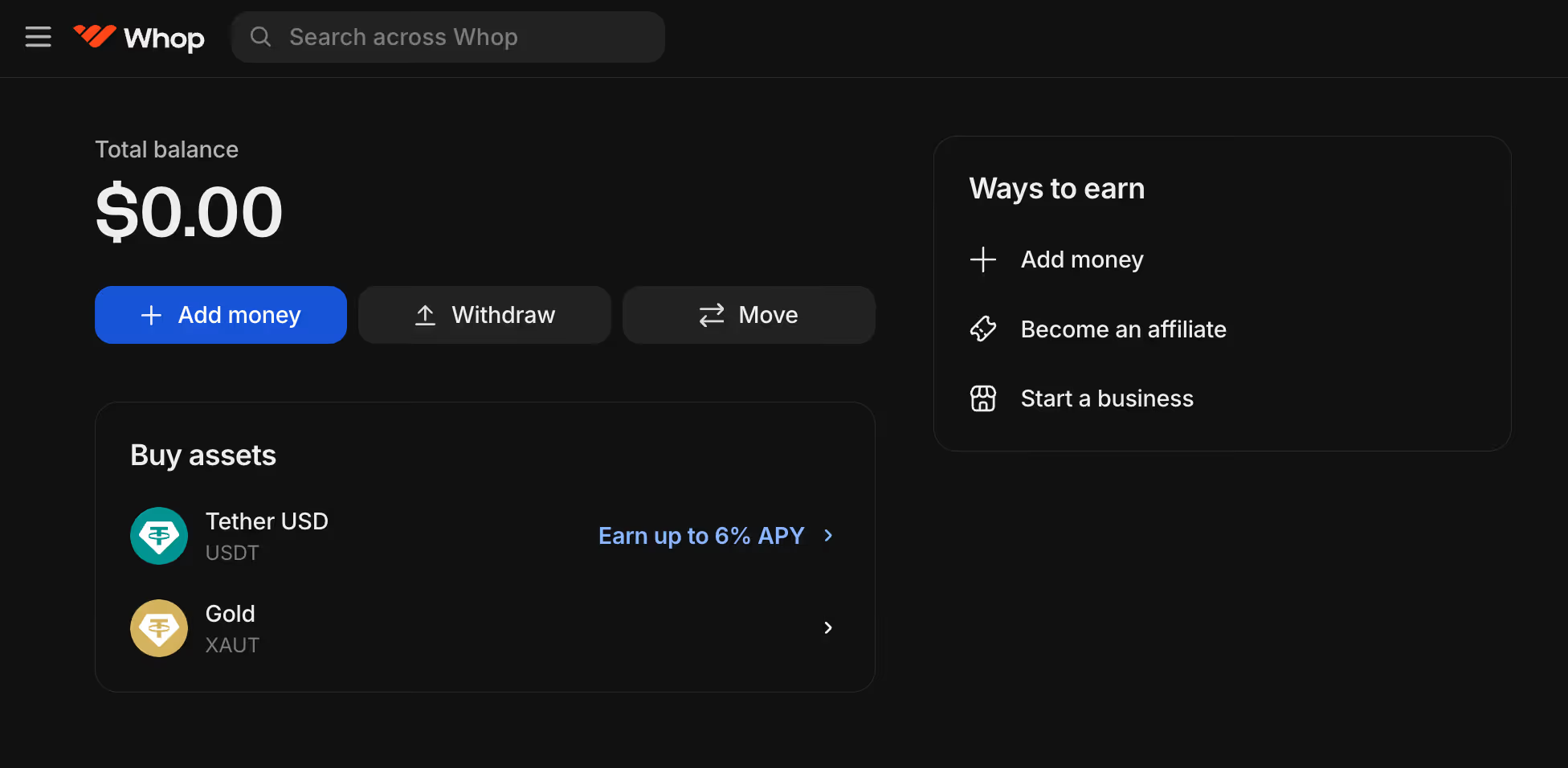
The ecommerce landscape is rapidly evolving: Entrepreneurs are launching lean, multimillion-dollar businesses, and they need financial tools that maximize revenue while keeping things simple. By integrating Veda’s programmable vault technology, Whop is able to offer an earning experience that can outperform a traditional high-yield savings account, offering yields of up to 6% APY and instant withdrawals with no required deposit minimums.
“Stablecoin vaults specifically are appealing to fintechs because it allows them to generate yield from DeFi markets on idle assets, which retains users and keeps their funds in-app. Whop is on the cutting edge, upgrading the way businesses earn online.”
– Sun Raghupathi, Veda CEO & Co-Founder
Users can make deposits to Treasury on Whop via credit card, ApplePay, PayPal, or with digital assets using a crypto wallet. Businesses can move existing cash balances on Whop into Treasury instantly, with no upper limits on cash and crypto deposits.
At its core, this vault integration is about providing a simple and efficient earning experience, furthering Whop’s mission to help businesses earn more online. Instead of having to move revenue off-platform, users can keep funds on Whop to generate additional passive income. This new feature ensures balances are working to earn more from the moment a sale is made.
On the backend, yield is generated with account balances via the following process: First, funds in fiat currency are automatically converted to Tether’s USDT0 stablecoin and deposited to a self-custodial onchain wallet. Funds are then sent to a non-custodial Veda vault on Plasma. Whop selected the Plasma Layer-1 blockchain, built specifically for fast and reliable stablecoin payments, for this integration.
“As we designed the architecture for Treasury with Whop, we needed yield infrastructure we could plug into programmatically and trust at scale. Veda provides this with battle-tested infrastructure,” said Plasma CEO Paul Faecks.
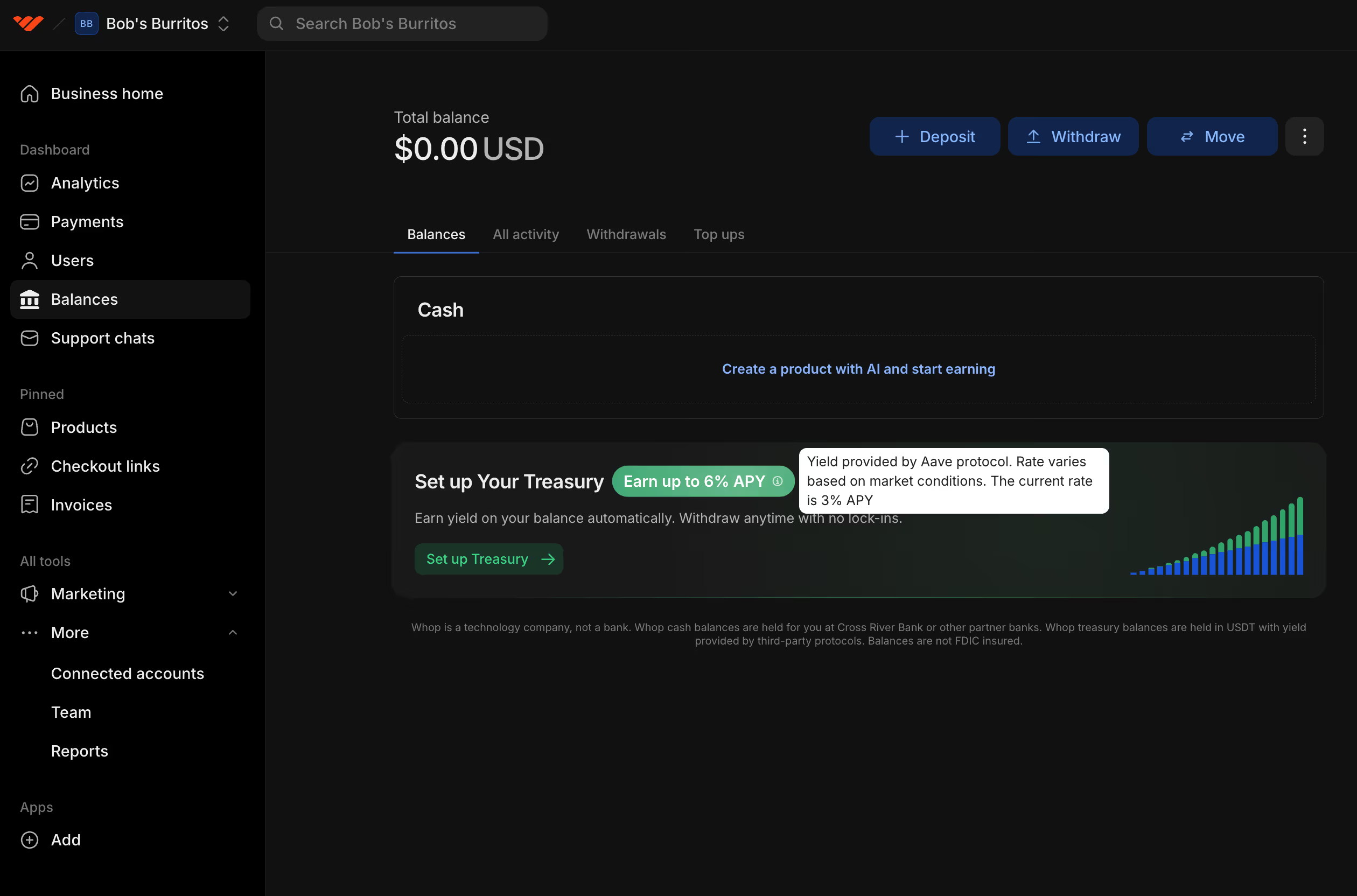
Veda is also the Whop Treasury vault’s curator, or risk manager, that puts balances to work. Yield earned from Aave borrower fees is sent to the vault and user balances are updated, reflecting a dollar amount.
Veda's vault solution is universally-compatible, making it easy to securely connect to any chain and protocol. Because these vauzlts are also non-custodial by design, only vault depositors have the ability to withdraw their own funds. Neither Veda nor any other third party is able to remove or transfer user funds.
This unique infrastructure also makes it possible for Whop to offer instant withdrawals and autocompounding on balances. The vault automatically reinvests yield generated on the backend, maximizing earnings over time without requiring the user to sign any transactions or manually claim rewards.
Transparency is an important part of any vault solution. Veda vaults keep all financial activity onchain, meaning actions are enforced by code and depositors can continuously see where their funds are at all times.
With Veda, enterprises can deploy a vault once and modify curators, supported assets, chains, and protocols as needed, making Veda the most versatile vault solution that’s built to last.



March 2026
A Veda vault powers Aave stablecoin yield with Whop Finance.
Whop, the fastest-growing internet market recently valued at $1.6 billion, has added Veda’s vault infrastructure to let millions start earning yield on their account balances in just a few clicks.
Whop’s 21M+ customers can now activate their account balances by opting into earning within Whop Finance. More than 2.5M businesses using Whop can also enable this yield feature with Treasury.
“With Whop Finance we’re building the financial infrastructure for the next generation of internet businesses. Funds held in Whop Treasury don’t sit idle. Instead they generate yield securely,” said Whop Head of Crypto Michael Beer. “Veda lets us offer a wealth-generation engine built directly into the Whop dashboard.”
This new integration activates account balances on the backend by routing funds through a Veda vault that allocates to onchain borrow-lend markets. Dollar balances are converted to Tether’s stablecoin and deployed to the leading lending protocol Aave to generate yield and collect rewards. On the frontend, all users have to do is opt in and watch their balances grow.
“Veda’s mission is to make it easy for enterprises to offer seamless onchain earn products,” said Sunand Raghupathi, CEO and Co-Founder of Veda.
The ecommerce landscape is rapidly evolving: Entrepreneurs are launching lean, multimillion-dollar businesses, and they need financial tools that maximize revenue while keeping things simple. By integrating Veda’s programmable vault technology, Whop is able to offer an earning experience that can outperform a traditional high-yield savings account, offering yields of up to 6% APY and instant withdrawals with no required deposit minimums.
“Stablecoin vaults specifically are appealing to fintechs because it allows them to generate yield from DeFi markets on idle assets, which retains users and keeps their funds in-app. Whop is on the cutting edge, upgrading the way businesses earn online.”
– Sun Raghupathi, Veda CEO & Co-Founder
Users can make deposits to Treasury on Whop via credit card, ApplePay, PayPal, or with digital assets using a crypto wallet. Businesses can move existing cash balances on Whop into Treasury instantly, with no upper limits on cash and crypto deposits.
At its core, this vault integration is about providing a simple and efficient earning experience, furthering Whop’s mission to help businesses earn more online. Instead of having to move revenue off-platform, users can keep funds on Whop to generate additional passive income. This new feature ensures balances are working to earn more from the moment a sale is made.
On the backend, yield is generated with account balances via the following process: First, funds in fiat currency are automatically converted to Tether’s USDT0 stablecoin and deposited to a self-custodial onchain wallet. Funds are then sent to a non-custodial Veda vault on Plasma. Whop selected the Plasma Layer-1 blockchain, built specifically for fast and reliable stablecoin payments, for this integration.
“As we designed the architecture for Treasury with Whop, we needed yield infrastructure we could plug into programmatically and trust at scale. Veda provides this with battle-tested infrastructure,” said Plasma CEO Paul Faecks.
Veda is also the Whop Treasury vault’s curator, or risk manager, that puts balances to work. Yield earned from Aave borrower fees is sent to the vault and user balances are updated, reflecting a dollar amount.
Veda's vault solution is universally-compatible, making it easy to securely connect to any chain and protocol. Because these vauzlts are also non-custodial by design, only vault depositors have the ability to withdraw their own funds. Neither Veda nor any other third party is able to remove or transfer user funds.
This unique infrastructure also makes it possible for Whop to offer instant withdrawals and autocompounding on balances. The vault automatically reinvests yield generated on the backend, maximizing earnings over time without requiring the user to sign any transactions or manually claim rewards.
Transparency is an important part of any vault solution. Veda vaults keep all financial activity onchain, meaning actions are enforced by code and depositors can continuously see where their funds are at all times.
With Veda, enterprises can deploy a vault once and modify curators, supported assets, chains, and protocols as needed, making Veda the most versatile vault solution that’s built to last.


.webp)