

.webp)

Financial Agents Need a HarnessAugust 3, 2026
READ MORE.svg)


AI is already transforming finance. Companies like Stripe and Ramp are actively building infrastructure for Agentic Commerce: a world in which agents can make purchases, move money, and transact on behalf of users.
An area where I have seen much less discussion is Agentic Finance: agents that provide financial advice, make financial plans, and manage capital on behalf of users.
This is incredibly powerful.
Today, high-quality financial advice and planning are not available to most people in the world. To get an idea of the asymmetry:
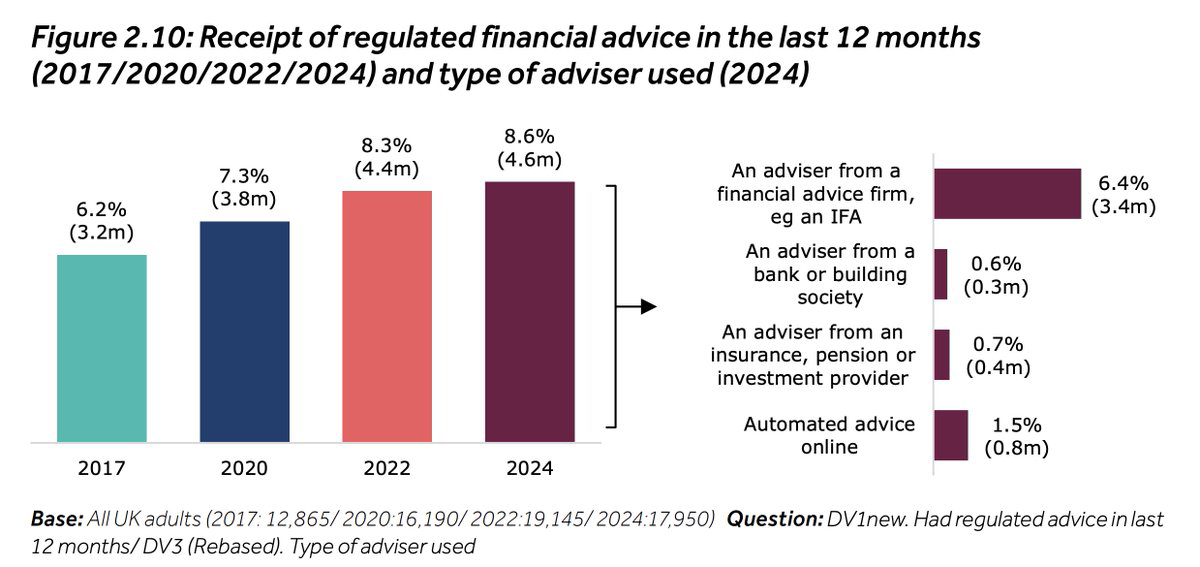
Even those who have financial advice and literacy in many cases fall through the cracks. I have family members who opened their retirement accounts only to discover that they had far less than they thought they did, and far less than they should have had if that capital had been invested properly.
Better financial advice and planning help people accomplish their life goals. Buying a home, supporting a family, changing careers, retiring, or taking care of aging parents all depend in some way on how capital is managed.
Financial agents have the potential to make this kind of support truly personalized and accessible to people globally.
There are two fundamental bottlenecks in the personalization of finance.
The first bottleneck is that financial intelligence is scarce.
There are just over 236,000 Certified Financial Planner professionals across 29 territories. Against a global population of roughly 8.2 billion, that is approximately one CFP professional for every 35,000 people.
Personalized financial advice requires expensive human expertise. A good advisor needs to understand a person’s income, assets, liabilities, taxes, family situation, risk tolerance, time horizon, and goals. They then need to continuously update their recommendations as those circumstances change.
That level of attention is expensive. As a result, it is largely reserved for wealthy clients. Everyone else receives standardized products and broad rules of thumb.
The second bottleneck is that financial infrastructure is not built for agents.
Capital is fragmented across banks, brokerages, retirement accounts, lenders, asset managers, custodians, and payment providers. Each institution has its own accounts, interfaces, and legal restrictions. Markets are separated by geography and jurisdiction. Many assets cannot move freely between platforms. Even basic financial actions can require paperwork, settlement delays, and coordination between multiple institutions.
Few systems are less amenable to automation. A financial agent might know exactly what someone should do, but that does not mean it can access the relevant assets and manage the strategy over time.
AI makes personalized financial advice dramatically cheaper. An agent can continuously understand someone’s financial situation, evaluate opportunities, and adapt its recommendations as their needs change.
This behavior is already emerging. In a 2026 Ernst & Young survey of more than 18,000 people across 23 countries, 21% said they had used AI agents for financial product recommendations, while 11% said they had allowed AI to manage their finances with little or no human intervention.
Making this intelligence widely available will improve financial literacy. People will be able to ask questions, understand products, and receive guidance that was previously inaccessible.
But intelligence alone is not sufficient. A financial agent still needs to be able to:
Put simply, financial agents need a harness that provides authorization, access to financial markets, and an operational environment.
Let’s start with authorization. Would you trust an AI model to manage your money today?
Most people, myself included, would say no. I suspect the common reason is that even if the model generally provides good advice, it could make a mistake, go off the rails, or get hacked and lose money.
Similar to what we’ve seen in agentic commerce, the solution is to place hard constraints on what the agent can and cannot do.

A user should be able to define which markets and assets the agent can access, how much risk it can take, and which actions require additional approval. Those constraints should be enforced by the underlying system rather than relying solely on instructions (e.g. in a prompt) that a model might ignore. They must be enforced by the underlying system.
Cryptography is the project of making mathematically unbreakable promises. Smart contracts can make an agent’s mandate explicit and enforce it at the execution layer. The agent can act freely within the boundaries it has been given, but it cannot act outside them.
The second requirement is access.
A financial agent can be smart and safe, but its usefulness is limited by the assets and markets it can reach.
Traditional finance is difficult for agents to navigate because it is riddled with red tape and fragmented across institutions, accounts, systems, and jurisdictions. Most financial products were designed for human intermediaries. They rely on closed databases, manual processes, and institution-specific integrations.
This problem is being addressed by one of the most powerful financial megatrends alongside stablecoins: tokenization.
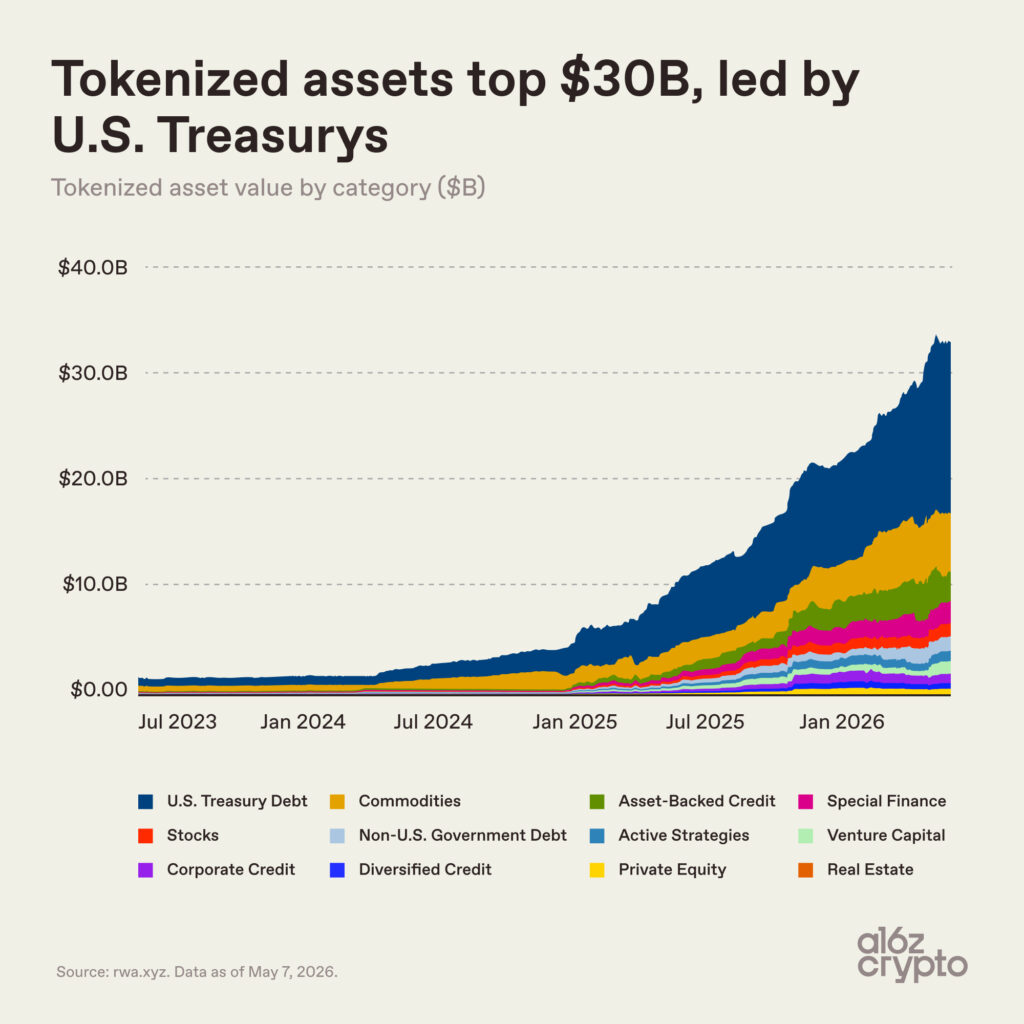
As traditional assets move onchain, they become programmable and discoverable by software. An agent can interact with cash, credit, equities, funds, commodities, and other financial assets through common technical standards rather than siloed institutional systems.
Tokenization does not eliminate regulation or eligibility requirements. But it does make those requirements easier to express and enforce through the infrastructure. An asset can define who is permitted to hold it, how it can be transferred, and what conditions must be satisfied before a transaction occurs.
The third requirement is compliance. Financial agents will only be useful if they can operate within the legal and eligibility rules that govern financial markets. As more assets move onchain, those rules can increasingly be expressed through programmable infrastructure, allowing agents to interact only with assets and markets they are permitted to access. The result is a financial system that agents can actually access and interact with.
The fourth requirement is an operational layer.
Financial management is far more involved than executing occasional trades. It requires ongoing rebalancing, monitoring, accounting, reporting, liquidity management, compliance, and risk management. Positions need to be tracked. Markets change. Assets mature. Interest payments arrive. Users deposit and withdraw. Strategies therefore need to continually respond to new information.
Financial management is continuous. An agent therefore needs more than a transaction interface. It needs a persistent operating environment in which it can discover, evaluate, and transact with the universe of onchain assets and markets, and then continue managing those positions over time.

A vault is a programmable control layer that defines who can move assets, where they can move them, and under what conditions.
This makes vaults a natural interface between financial agents and the growing onchain financial system.
A vault can define the agent’s mandate: which assets it can buy, which markets it can use, how much exposure it can take, and which actions are prohibited. The agent can manage capital within those constraints without ever receiving unrestricted control of the assets.
Vaults also create a persistent operating environment. Data flows from markets to agents, from agents into actions, and back to users through reporting. Deposits, withdrawals, accounting, rebalancing, and risk controls can all be coordinated around the same structure. The flow becomes straightforward: users put capital into a vault. They define the constraints of the vault, either independently or through a financial platform they already trust. They then authorize a financial agent to act on their behalf within those constraints.
The vault platform acts as the harness for the financial agent.
With authorization, access, and an operating environment, every user can have a personal AI agent that understands their financial context and goals and can safely act on their behalf.
Most discussions of agentic finance stop here at the personal financial agent.
But they overlook something important about financial market structure: Traditional financial products pool capital.
Mutual funds, exchange-traded funds, money-market funds, credit funds, pension funds, and insurance products all combine capital from many users. They do this because pooling reduces transaction and operating costs, improves liquidity and purchasing power, and provides access to assets and strategies that would be inefficient or unavailable at the individual account level.
Financial agents do not eliminate these economic advantages.
Fully individualized execution is often inefficient. It would make little sense for every user’s agent to separately negotiate access, build positions, manage liquidity, perform accounting, and transact with the same underlying markets.
With pooled financial products, users can share liquidity, transaction costs, market access, and operational infrastructure while retaining different goals and constraints.
This means the market will not simply consist of millions of agents independently trading individual portfolios. Instead, user-level agents will understand each person’s goals and allocate their capital across financial products.
The next important question is: What happens to financial products in this world?
There is something fundamentally broken about how financial products are created today. Financial products today are largely supply-led.
An issuer identifies what it believes the market might want, creates a product based on a broad estimate of demand, and then asks distributors to sell it to users. This structure is partly a consequence of cost.
Creating a financial product today requires legal structuring, custody, administration, accounting, compliance, and a host of other complex operations. A product needs to reach meaningful scale before the economics work. Issuers therefore build broad products designed to serve the largest possible category of users, averaging over the needs of individuals.
Users are then forced to choose among the products that happen to exist. They may be able to personalize their allocation across those products, but they have little influence over the construction of the products themselves.
Vaults change this.
By drastically reducing the cost of creating and operating financial products, vaults make product creation demand-led.

A distributor (a bank, wallet, brokerage, fintech application, or consumer platform) already has a direct relationship with its users. It can observe what those users hold and which needs recur across its customer base.
Instead of waiting for an issuer to create a generic product, the distributor can identify those needs and translate them into a product assembled from the underlying markets and assets.
A platform might discover that a meaningful group of users wants dollar yield with daily liquidity, or diversified exposure to tokenized equities, or a retirement product with a particular combination of income, risk, and time horizon. The platform can create a vault around that recurring need and pool users who share it.
The product is no longer based on a broad guess about market demand. It is built from actual demand already visible at the distribution layer.
We are already seeing the early signs of this. Large financial platforms such as Robinhood, Kraken, and Coinbase are using vaults to build bespoke products for their users rather than simply reselling the same products offered everywhere else.
Over time, financial products will become more modular, more specific, and easier to create. Distributors will continuously identify unmet needs within their customer bases and assemble products around them.
Financial personalization through agents and vaults therefore exists at two levels.
At the individual level, an agent understands each person’s goals, constraints, financial situation, and risk tolerance. It determines how much they should save, how much risk they should take, and how their capital should be allocated across products.
At the product level, distributors identify recurring needs across their customer bases and create pooled products specifically designed around those needs.
The result is a financial system that becomes increasingly personalized at the user level while becoming increasingly programmable at the infrastructure level. That combination has the potential to reshape how financial products are created, distributed, and managed.
Exciting times.
https://gflec.org/initiatives/sp-global-finlit-survey
https://www.fca.org.uk/publication/financial-lives/financial-lives-survey-2024-key-findings.pdf
https://population.un.org/wpp/assets/Files/WPP2024_Summary-of-Results.pdf
https://a16zcrypto.com/posts/article/tokenized-asset-rwa-market-data-charts



August 2026
AI will make financial intelligence abundant. The challenge is getting agents to act safely across markets.
AI is already transforming finance. Companies like Stripe and Ramp are actively building infrastructure for Agentic Commerce: a world in which agents can make purchases, move money, and transact on behalf of users.
An area where I have seen much less discussion is Agentic Finance: agents that provide financial advice, make financial plans, and manage capital on behalf of users.
This is incredibly powerful.
Today, high-quality financial advice and planning are not available to most people in the world. To get an idea of the asymmetry:
Even those who have financial advice and literacy in many cases fall through the cracks. I have family members who opened their retirement accounts only to discover that they had far less than they thought they did, and far less than they should have had if that capital had been invested properly.
Better financial advice and planning help people accomplish their life goals. Buying a home, supporting a family, changing careers, retiring, or taking care of aging parents all depend in some way on how capital is managed.
Financial agents have the potential to make this kind of support truly personalized and accessible to people globally.
There are two fundamental bottlenecks in the personalization of finance.
The first bottleneck is that financial intelligence is scarce.
There are just over 236,000 Certified Financial Planner professionals across 29 territories. Against a global population of roughly 8.2 billion, that is approximately one CFP professional for every 35,000 people.
Personalized financial advice requires expensive human expertise. A good advisor needs to understand a person’s income, assets, liabilities, taxes, family situation, risk tolerance, time horizon, and goals. They then need to continuously update their recommendations as those circumstances change.
That level of attention is expensive. As a result, it is largely reserved for wealthy clients. Everyone else receives standardized products and broad rules of thumb.
The second bottleneck is that financial infrastructure is not built for agents.
Capital is fragmented across banks, brokerages, retirement accounts, lenders, asset managers, custodians, and payment providers. Each institution has its own accounts, interfaces, and legal restrictions. Markets are separated by geography and jurisdiction. Many assets cannot move freely between platforms. Even basic financial actions can require paperwork, settlement delays, and coordination between multiple institutions.
Few systems are less amenable to automation. A financial agent might know exactly what someone should do, but that does not mean it can access the relevant assets and manage the strategy over time.
AI makes personalized financial advice dramatically cheaper. An agent can continuously understand someone’s financial situation, evaluate opportunities, and adapt its recommendations as their needs change.
This behavior is already emerging. In a 2026 Ernst & Young survey of more than 18,000 people across 23 countries, 21% said they had used AI agents for financial product recommendations, while 11% said they had allowed AI to manage their finances with little or no human intervention.
Making this intelligence widely available will improve financial literacy. People will be able to ask questions, understand products, and receive guidance that was previously inaccessible.
But intelligence alone is not sufficient. A financial agent still needs to be able to:
Put simply, financial agents need a harness that provides authorization, access to financial markets, and an operational environment.
Let’s start with authorization. Would you trust an AI model to manage your money today?
Most people, myself included, would say no. I suspect the common reason is that even if the model generally provides good advice, it could make a mistake, go off the rails, or get hacked and lose money.
Similar to what we’ve seen in agentic commerce, the solution is to place hard constraints on what the agent can and cannot do.
A user should be able to define which markets and assets the agent can access, how much risk it can take, and which actions require additional approval. Those constraints should be enforced by the underlying system rather than relying solely on instructions (e.g. in a prompt) that a model might ignore. They must be enforced by the underlying system.
Cryptography is the project of making mathematically unbreakable promises. Smart contracts can make an agent’s mandate explicit and enforce it at the execution layer. The agent can act freely within the boundaries it has been given, but it cannot act outside them.
The second requirement is access.
A financial agent can be smart and safe, but its usefulness is limited by the assets and markets it can reach.
Traditional finance is difficult for agents to navigate because it is riddled with red tape and fragmented across institutions, accounts, systems, and jurisdictions. Most financial products were designed for human intermediaries. They rely on closed databases, manual processes, and institution-specific integrations.
This problem is being addressed by one of the most powerful financial megatrends alongside stablecoins: tokenization.
As traditional assets move onchain, they become programmable and discoverable by software. An agent can interact with cash, credit, equities, funds, commodities, and other financial assets through common technical standards rather than siloed institutional systems.
Tokenization does not eliminate regulation or eligibility requirements. But it does make those requirements easier to express and enforce through the infrastructure. An asset can define who is permitted to hold it, how it can be transferred, and what conditions must be satisfied before a transaction occurs.
The third requirement is compliance. Financial agents will only be useful if they can operate within the legal and eligibility rules that govern financial markets. As more assets move onchain, those rules can increasingly be expressed through programmable infrastructure, allowing agents to interact only with assets and markets they are permitted to access. The result is a financial system that agents can actually access and interact with.
The fourth requirement is an operational layer.
Financial management is far more involved than executing occasional trades. It requires ongoing rebalancing, monitoring, accounting, reporting, liquidity management, compliance, and risk management. Positions need to be tracked. Markets change. Assets mature. Interest payments arrive. Users deposit and withdraw. Strategies therefore need to continually respond to new information.
Financial management is continuous. An agent therefore needs more than a transaction interface. It needs a persistent operating environment in which it can discover, evaluate, and transact with the universe of onchain assets and markets, and then continue managing those positions over time.
A vault is a programmable control layer that defines who can move assets, where they can move them, and under what conditions.
This makes vaults a natural interface between financial agents and the growing onchain financial system.
A vault can define the agent’s mandate: which assets it can buy, which markets it can use, how much exposure it can take, and which actions are prohibited. The agent can manage capital within those constraints without ever receiving unrestricted control of the assets.
Vaults also create a persistent operating environment. Data flows from markets to agents, from agents into actions, and back to users through reporting. Deposits, withdrawals, accounting, rebalancing, and risk controls can all be coordinated around the same structure. The flow becomes straightforward: users put capital into a vault. They define the constraints of the vault, either independently or through a financial platform they already trust. They then authorize a financial agent to act on their behalf within those constraints.
The vault platform acts as the harness for the financial agent.
With authorization, access, and an operating environment, every user can have a personal AI agent that understands their financial context and goals and can safely act on their behalf.
Most discussions of agentic finance stop here at the personal financial agent.
But they overlook something important about financial market structure: Traditional financial products pool capital.
Mutual funds, exchange-traded funds, money-market funds, credit funds, pension funds, and insurance products all combine capital from many users. They do this because pooling reduces transaction and operating costs, improves liquidity and purchasing power, and provides access to assets and strategies that would be inefficient or unavailable at the individual account level.
Financial agents do not eliminate these economic advantages.
Fully individualized execution is often inefficient. It would make little sense for every user’s agent to separately negotiate access, build positions, manage liquidity, perform accounting, and transact with the same underlying markets.
With pooled financial products, users can share liquidity, transaction costs, market access, and operational infrastructure while retaining different goals and constraints.
This means the market will not simply consist of millions of agents independently trading individual portfolios. Instead, user-level agents will understand each person’s goals and allocate their capital across financial products.
The next important question is: What happens to financial products in this world?
There is something fundamentally broken about how financial products are created today. Financial products today are largely supply-led.
An issuer identifies what it believes the market might want, creates a product based on a broad estimate of demand, and then asks distributors to sell it to users. This structure is partly a consequence of cost.
Creating a financial product today requires legal structuring, custody, administration, accounting, compliance, and a host of other complex operations. A product needs to reach meaningful scale before the economics work. Issuers therefore build broad products designed to serve the largest possible category of users, averaging over the needs of individuals.
Users are then forced to choose among the products that happen to exist. They may be able to personalize their allocation across those products, but they have little influence over the construction of the products themselves.
Vaults change this.
By drastically reducing the cost of creating and operating financial products, vaults make product creation demand-led.
A distributor (a bank, wallet, brokerage, fintech application, or consumer platform) already has a direct relationship with its users. It can observe what those users hold and which needs recur across its customer base.
Instead of waiting for an issuer to create a generic product, the distributor can identify those needs and translate them into a product assembled from the underlying markets and assets.
A platform might discover that a meaningful group of users wants dollar yield with daily liquidity, or diversified exposure to tokenized equities, or a retirement product with a particular combination of income, risk, and time horizon. The platform can create a vault around that recurring need and pool users who share it.
The product is no longer based on a broad guess about market demand. It is built from actual demand already visible at the distribution layer.
We are already seeing the early signs of this. Large financial platforms such as Robinhood, Kraken, and Coinbase are using vaults to build bespoke products for their users rather than simply reselling the same products offered everywhere else.
Over time, financial products will become more modular, more specific, and easier to create. Distributors will continuously identify unmet needs within their customer bases and assemble products around them.
Financial personalization through agents and vaults therefore exists at two levels.
At the individual level, an agent understands each person’s goals, constraints, financial situation, and risk tolerance. It determines how much they should save, how much risk they should take, and how their capital should be allocated across products.
At the product level, distributors identify recurring needs across their customer bases and create pooled products specifically designed around those needs.
The result is a financial system that becomes increasingly personalized at the user level while becoming increasingly programmable at the infrastructure level. That combination has the potential to reshape how financial products are created, distributed, and managed.
Exciting times.
https://gflec.org/initiatives/sp-global-finlit-survey
https://www.fca.org.uk/publication/financial-lives/financial-lives-survey-2024-key-findings.pdf
https://population.un.org/wpp/assets/Files/WPP2024_Summary-of-Results.pdf
https://a16zcrypto.com/posts/article/tokenized-asset-rwa-market-data-charts


.webp)